 EN
 DE
 FR
Managing rainwater locally – but how?
Heavy rainfall, sealed surfaces and overburdened sewerage systems make the management of stormwater an important planning task. Rather than simply draining rainwater away as quickly as possible, it is worth asking first: Can it be used, retained, allowed to evaporate or seep away on site?
An infiltration system can reduce the volume of water entering the sewerage system and – under the right conditions – contribute to groundwater recharge. However, not every site is suitable for this. Soil permeability, the groundwater level and the quality of the inflowing water determine whether and how infiltration is possible.
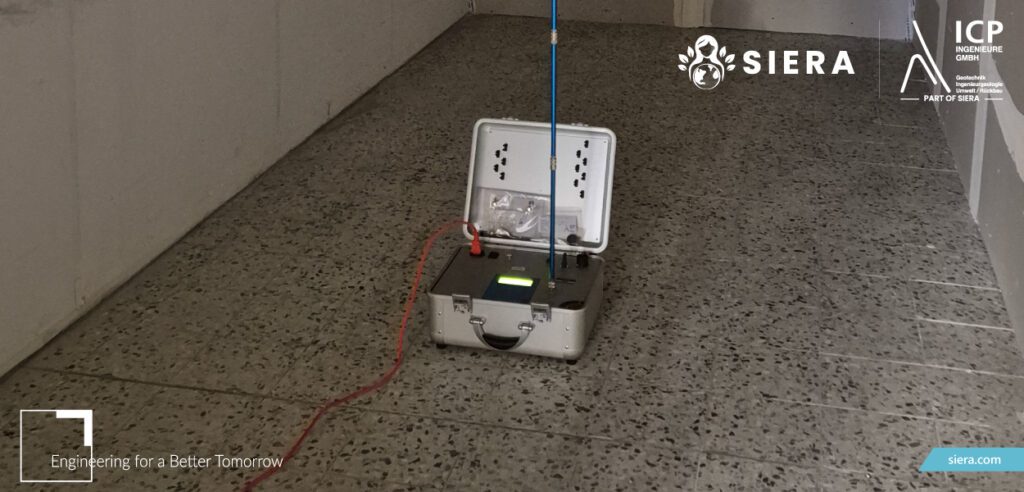
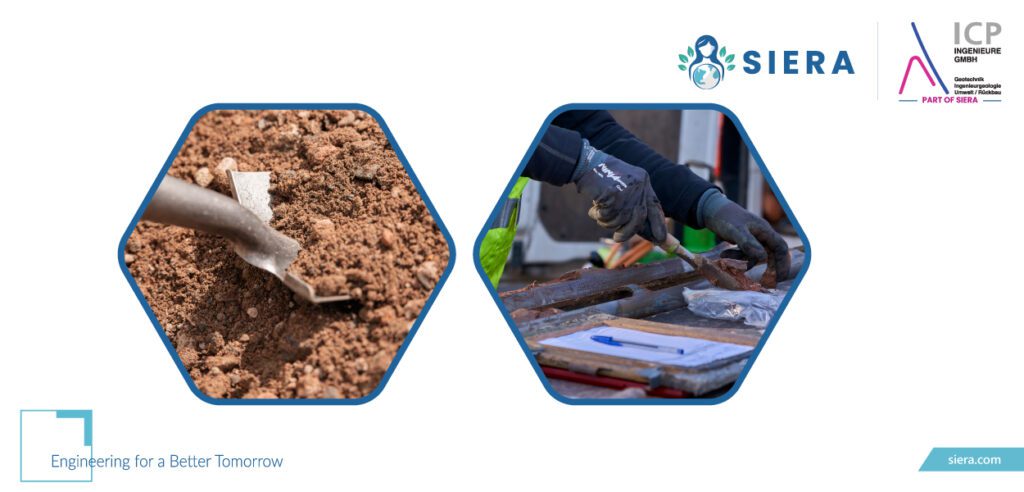
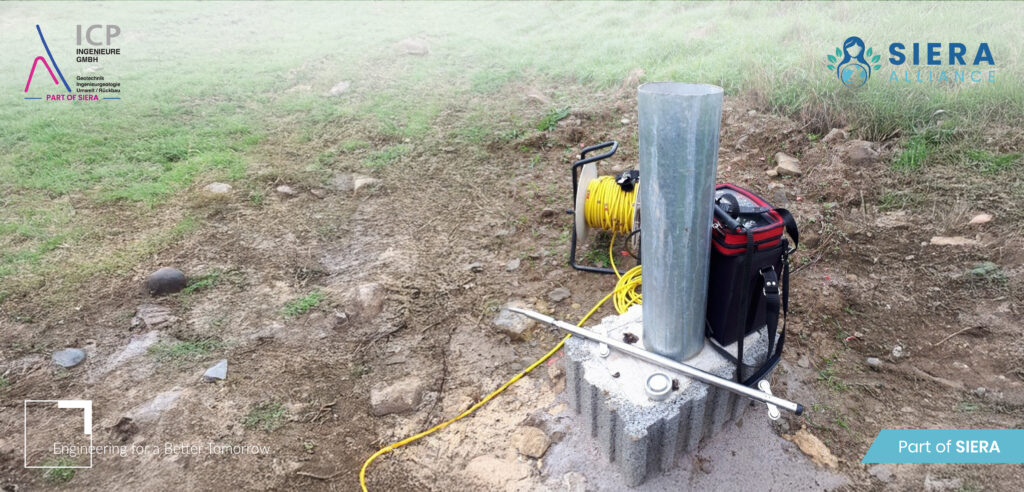
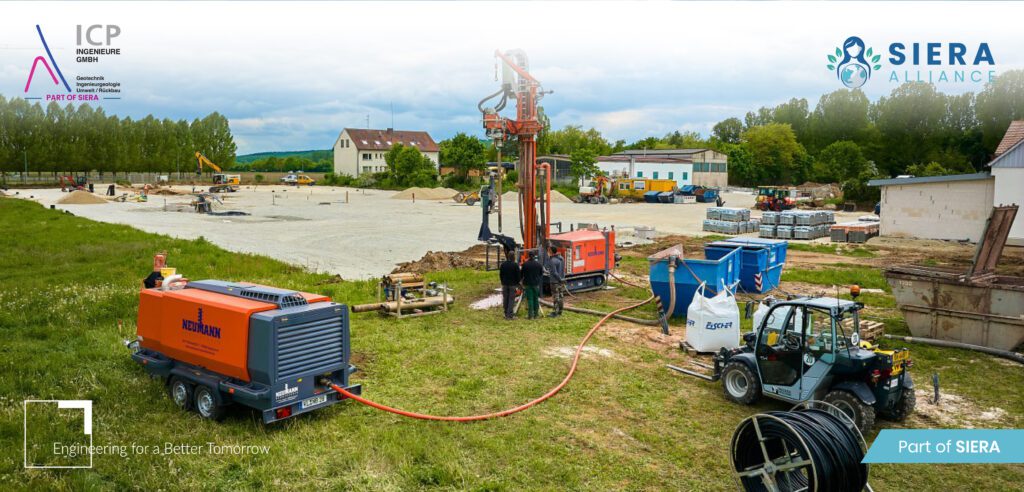
ICP Engineers GmbH - Part of SIERA – To this end, it carries out on-site investigations into the ground conditions and groundwater conditions. The team measures groundwater levels and conducts infiltration tests. On request, it also assists with the planning and design of the facility, as well as liaising with the relevant authority.
Nature-based rainwater management as a guiding principle
A sustainable approach to rainwater management involves more than just a single system. As a practical guide, measures can be considered in a logical sequence: minimising or utilising rainwater, promoting evaporation, facilitating infiltration, retaining water and, where necessary, discharging any remaining water at a controlled rate.
That is no rigid legal hierarchy. The most suitable solution depends on the plot of land, its use and the local water conditions. For example, a green space may allow for infiltration at one site, whilst at another site a high water table or poorly permeable soil may make this unsuitable.
Section 55(2) of the Water Resources Act stipulates that, where possible, rainwater should be allowed to infiltrate or be dispersed locally, or discharged without being mixed with wastewater – provided that provided that this does not conflict with legal requirements or water management considerations. For this reason, this principle does not imply a blanket permission to allow rainwater to infiltrate on any plot of land.
Which infiltration systems are suitable?
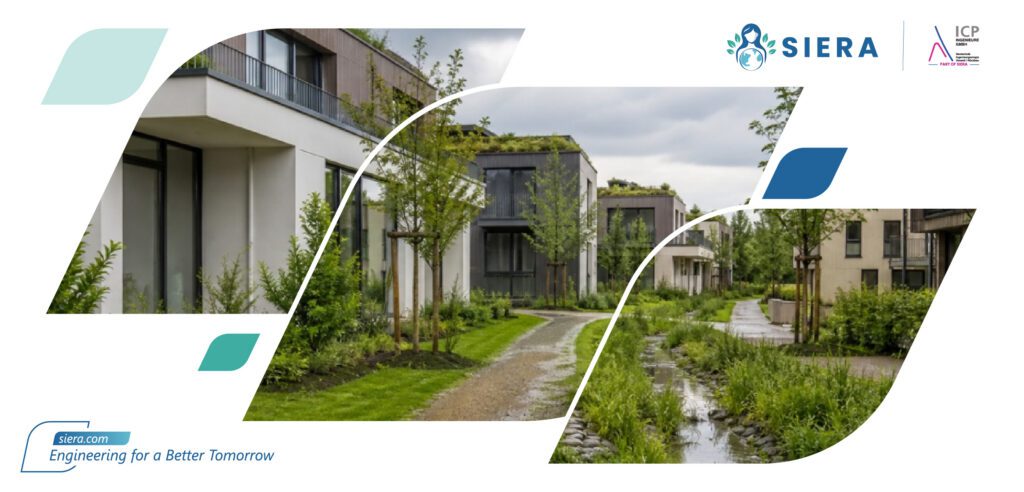
As well as allowing water to seep away, a depression also acts as a purification system thanks to the active topsoil layer. In a swale, on the other hand, water is stored underground and then released. A drainage ditch is not usually a stand-alone treatment plant. If the incoming water is contaminated, suitable pre-treatment must be considered.
Soakaway systems deserve special attention because they can, to some extent, bypass the natural path through the soil. A lack of space on the plot alone is therefore not in itself a sufficient reason to choose this method of construction.
Test the soil and groundwater first
For a system to function, the subsoil must be able to absorb sufficient quantities of water. Sandy and gravelly soils are often more suitable for this purpose than highly cohesive soils such as clay or dense silt. However, it is not the general soil type that is decisive, but rather the permeability determined at the planned installation site.
Infiltration tests provide important data in this regard. They should be carried out at the location and depth relevant to the planned installation. ICP Engineers GmbH within SIERA therefore adapts the investigations to the planned location and depth of the facility.
Equally important is the relevant groundwater level. There must be sufficient space between the base of the installation and the groundwater level to allow for the intended passage through the soil. A distance of approximately 1.0 m is often used as a guideline; however, the specific value to be applied in each individual case must be determined on the basis of the relevant regulations, site conditions and official requirements.
A single groundwater level measurement is not always sufficient to assess potential fluctuations. The planning process must therefore clarify which data are required to evaluate the site.
The source of the water matters too
Rainwater is not independent of the surface area over which it runs off. Roofing materials, traffic areas and the use of a courtyard can influence which substances are carried along with it. Possible contaminants include, for example, sediments, tyre and brake wear particles, heavy metals or mineral oil hydrocarbons.
Before a system is sized, it is therefore necessary to record the connected roof, courtyard and traffic areas and assess their pollution potential. This determines whether direct infiltration is a viable option or whether pre-treatment is required – for example, via a suitable activated soil zone or another appropriate treatment stage.
Sufficient permeability alone does not make a site suitable if the protection of the soil and groundwater is neglected.
What happens in the event of heavy rain and the drainage system becoming overwhelmed?
An infiltration system must not only function during normal operation. Equally important is the question: Where does the water go when the system reaches its capacity or its output is temporarily restricted?
The scenario of excessive load must therefore be taken into account in the planning stage from the very beginning. Where possible, runoff should not pose a risk to buildings, cellars, foundations, neighbouring properties, traffic areas or sensitive infrastructure. Distances from structures, property boundaries, pipes and other underground installations must also be taken into account.
Suitable local rainfall data and the site-specific values determined are required for hydraulic design. The DWA-A138-1 worksheet covers the design, construction and operation of systems for the infiltration of rainwater and provides an important technical basis for this.
Taking approval, operation and maintenance into account
Depending on the type of installation, its location and the source of the rainwater, there may be obligations to notify the authorities, obtain a permit or provide evidence. Among other things, water law, the relevant regional legislation, local drainage by-laws and any requirements relating to water protection areas or mineral spring protection areas must be taken into account.
Planning does not end with commissioning either. An infiltration system requires monitoring and maintenance. Sediment can block inlets; filter and treatment stages must be checked. In the case of vegetated systems, maintenance of the vegetation is also required. Maintenance and any unusual occurrences should be documented in a way that allows them to be traced.
Those who take into account access to the system and its subsequent monitoring right from the planning stage create better conditions for a rainwater management system that functions effectively in the long term.
From the plot of land to the local water cycle
Rainwater infiltration is one component of a more comprehensive planning approach. Green roofs, unsealed surfaces, greening and retention can all work together to manage rainwater more effectively at source. Such approaches are often described using the term ‘sponge city’.
However, whether a trough, a ditch or a combination of the two is the right choice can only be determined on a site-by-site basis. The expert support provided by ICP Ingenieure GmbH – part of SIERA – combines investigations into the building ground and groundwater with the requirements for planning, dimensioning and, where necessary, consultation with the relevant authorities.
The best infiltration system is not the one chosen first – but the one that has been proven to be suitable for the site.
CTA
Are you planning a building project, or would you like to manage rainwater more effectively on your property? Please contact ICP Engineers GmbH - Part of SIERA, to have the soil, groundwater and potential infiltration solutions for your site assessed.
Engineering for a Better Tomorrow